


Am I under Arrest? Understanding Levels of Interaction and the 4th Amendment.
Can you be detained by law enforcement officers while not under arrest? According to Terry v. Ohio (U.S. 1968,) you can.
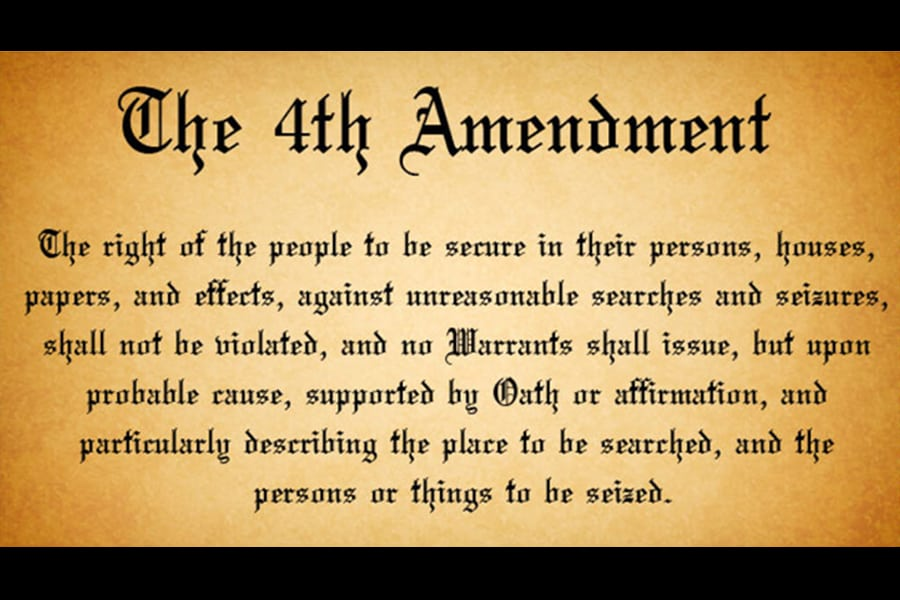
In 1963, the petitioner in the aforementioned case, Mr. Terry, was patted down by Officer Martin McFadden after McFadden observed Terry and another man “sizing-up” a local business. Believing that the men were preparing to rob the business, Officer McFadden approached the individuals and conducted a “pat-down” of their clothing, discovering two concealed pistols and ammunition. Terry was subsequently convicted and sentenced for Carrying a Concealed Weapon.
The defendants made a motion to suppress the firearms, but this was denied. The United States Supreme Court ruled that Officer McFadden “had reasonable cause to believe…that the defendants were conducting themselves suspiciously, and some interrogations should be made of his action.” The court further ruled that for his own protection, the officer had the right to pat down the outer clothing of these men, who he had a reasonable cause to believe might be armed.
So, what does this mean for law enforcement interactions today, and what we refer to as “levels of interactions?”
Simply put, interactions with law enforcement officers typically fall into one of the following three categories.
The first category of interaction is what is referred to as a “consensual encounter.” This is the most common interaction and generally the simplest. A good example of a consensual encounter would be if you ran into an on-duty deputy at City Market and they simply asked, “Hey how’s it going?” Whatever conversation that followed would simply be a “consensual encounter,” where no interview or interrogation was attempted, no 4th amendment seizures were made, and you were free to leave whenever you decided.
The second level of interaction, and one that does constitute a seizure under the 4th amendment, is called an “investigative detention.” This differs from a consensual encounter in that the person would not be free to leave until suspicions of criminal activity are either “confirmed or dispelled.” Reasonable, individualized, articulable suspicion must be present for an individual to be placed in investigative detention. This means that a law enforcement officer cannot simply stop and place someone in investigative detention just because they feel like it. Rather, they must be able to articulate that reasonable articulable suspicion of criminal activity existed at the time of detention. For example, if we receive a call over the radio that a male in a blue shirt and red truck just robbed the Kum and Go, and you happened to be a male wearing a blue shirt driving a red truck near the Kum and Go, reasonable articulable suspicion would exist for a law enforcement officer to briefly detain you (investigative detention,) to determine whether or not you were the suspect. The key here is that the officer is required to “diligently pursue the investigation in order to confirm or dispel suspicion” (United States v. Sharpe, 1985.) This means that as soon as the officer discovers that you did not rob the Kum and Go, he or she is required to release you. If it turns out that you did in fact rob the Kum and Go, then we would move to the third and final level of interaction, which is arrest.
Like an investigative detention, an arrest is considered a seizure under the 4th amendment. In order for an arrest to happen, “probable cause” must exist. Probable cause is typically found during the investigative detention phase and is a level above “reasonable suspicion.” Let’s return to our Kum and Go robbery example to better describe probable cause. After a law enforcement officer detains you in your red truck and blue shirt, matching the subject description, they also observe piles of unopened Snickers Bars, Pepsis, and Kum and Go hats in the truck. Upon interviewing the cashier, she reported that the only items that the suspect took were Snickers Bars, Pepsis and Kum and Go hats. With the observation of these items in the truck, we have now moved past reasonable suspicion and into probable cause, thus warranting an arrest.
These levels of interaction can be intimidating for law enforcement officers, as violating someone’s constitutional rights and unlawfully detaining them is, needless to say, extremely detrimental to our mission. We are trained to always exercise our rights as law enforcement officers with caution, and to respect our citizen’s freedom of movement.
I hope this brief overview on levels of interaction was worth the read.
As always, thanks for reading!
-Sheriff Alex Bakken.


Comments